CAPIVERSO / Videos

Videos.

Explore English at your own pace. Read, listen and learn, one discovery at a time.

psychology

Your body language shapes who you are

Body language affects how others see us, but it may also change how we see ourselves. Social psychologist Amy Cuddy shows how "power posing" -- standing in a posture of confidence, even when we don't feel confident -- can affect testosterone and cortisol levels in the brain, and might even have an impact on our chances for success. (Note: Some of the findings presented in this talk have been referenced in an ongoing debate among social scientists about robustness and reproducibility. Read Amy Cuddy's response under "Learn more" below.)

psychologycommunication
Explore content

The power of vulnerability

Brené Brown studies human connection -- our ability to empathize, belong, love. In a poignant, funny talk, she shares a deep insight from her research, one that sent her on a personal quest to know herself as well as to understand humanity. A talk to share.

psychologysociety
Explore content

The power of introverts

In a culture where being social and outgoing are prized above all else, it can be difficult, even shameful, to be an introvert. But, as Susan Cain argues in this passionate talk, introverts bring extraordinary talents and abilities to the world, and should be encouraged and celebrated.

psychologysociety
Explore content

How to spot a liar

On any given day we're lied to from 10 to 200 times, and the clues to detect those lie can be subtle and counter-intuitive. Pamela Meyer, author of Liespotting, shows the manners and "hotspots" used by those trained to recognize deception -- and she argues honesty is a value worth preserving.

psychologycommunication
Explore content

The happy secret to better work

We believe we should work hard in order to be happy, but could we be thinking about things backwards? In this fast-moving and very funny talk, psychologist Shawn Achor argues that, actually, happiness inspires us to be more productive.

productivitypsychology
Explore content

The surprising science of happiness

Dan Gilbert, author of "Stumbling on Happiness," challenges the idea that we’ll be miserable if we don’t get what we want. Our "psychological immune system" lets us feel truly happy even when things don’t go as planned.

psychologyscience
Explore content

The art of misdirection

Hailed as the greatest pickpocket in the world, Apollo Robbins studies the quirks of human behavior as he steals your watch. In a hilarious demonstration, Robbins samples the buffet of the TEDGlobal 2013 audience, showing how the flaws in our perception make it possible to swipe a wallet and leave it on its owner’s shoulder while they remain clueless.

artspsychology
Explore content

How to make stress your friend

Stress. It makes your heart pound, your breathing quicken and your forehead sweat. But while stress has been made into a public health enemy, new research suggests that stress may only be bad for you if you believe that to be the case. Psychologist Kelly McGonigal urges us to see stress as a positive, and introduces us to an unsung mechanism for stress reduction: reaching out to others.

healthpsychology
Explore content

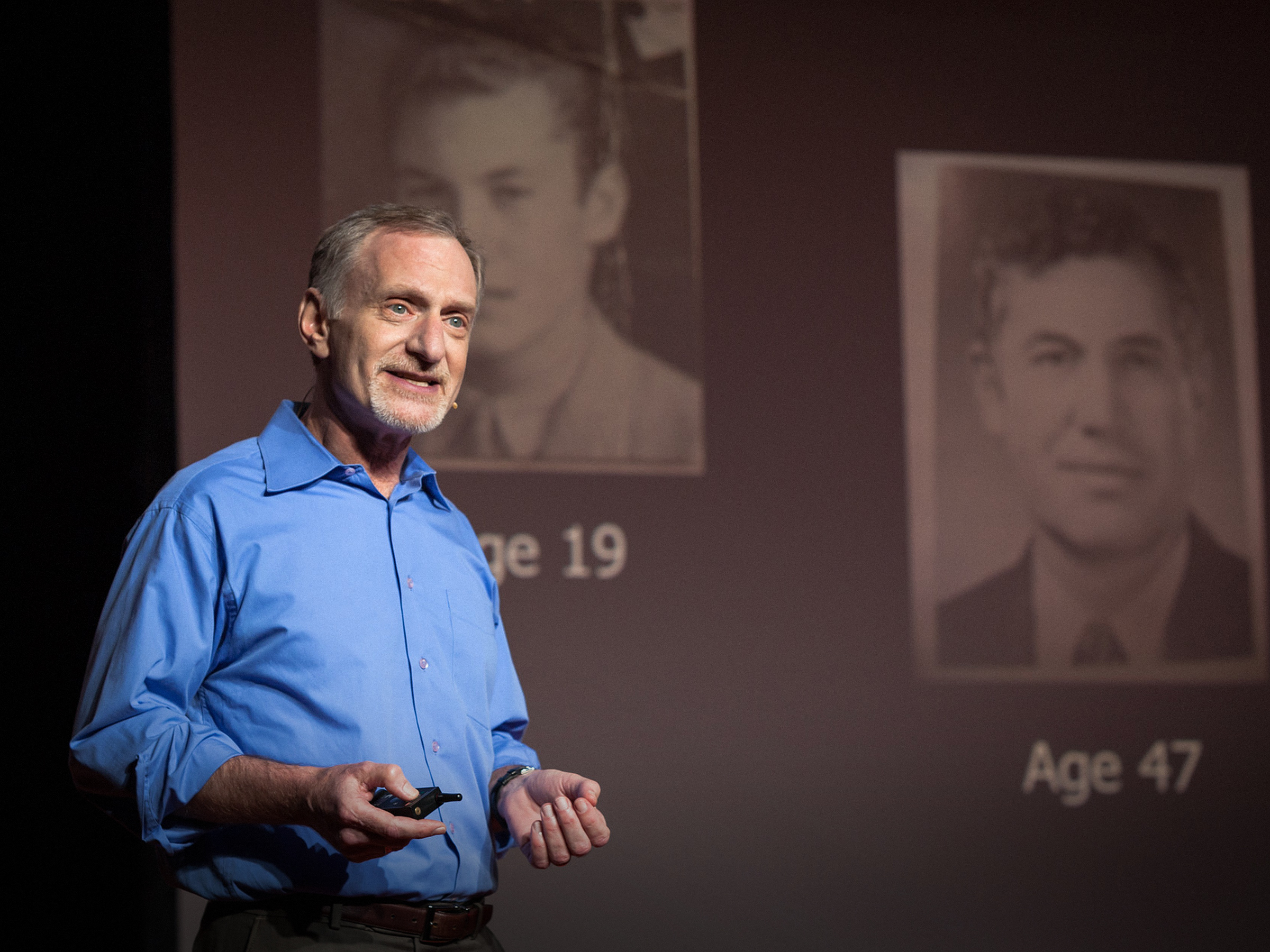
What makes a good life? Lessons from the longest study on happiness

What keeps us happy and healthy as we go through life? If you think it's fame and money, you're not alone – but, according to psychiatrist Robert Waldinger, you're mistaken. As the director of a 75-year-old study on adult development, Waldinger has unprecedented access to data on true happiness and satisfaction. In this talk, he shares three important lessons learned from the study as well as some practical, old-as-the-hills wisdom on how to build a fulfilling, long life.

healthpsychology
Explore content

The paradox of choice

Psychologist Barry Schwartz takes aim at a central tenet of western societies: freedom of choice. In Schwartz's estimation, choice has made us not freer but more paralyzed, not happier but more dissatisfied.

psychologyproductivity
Explore content

Why we love, why we cheat

Anthropologist Helen Fisher takes on a tricky topic – love – and explains its evolution, its biochemical foundations and its social importance. She closes with a warning about the potential disaster inherent in antidepressant abuse.

sciencepsychology
Explore content