Hubblecast 19 Special: Bigger is better
Hubble examines energetic activity and powerful magnetic phenomena associated with an erupting galaxy and its extreme central environment. Credit: ESA/Hubble (M. Kornmesser & L. L. Christensen)
Explore contentCAPIVERSO / Videos
Explore English at your own pace. Read, listen and learn, one discovery at a time.
Hubble examines energetic activity and powerful magnetic phenomena associated with an erupting galaxy and its extreme central environment. Credit: ESA/Hubble (M. Kornmesser & L. L. Christensen)
Explore contentAnthropologist Helen Fisher takes on a tricky topic – love – and explains its evolution, its biochemical foundations and its social importance. She closes with a warning about the potential disaster inherent in antidepressant abuse.
Explore contentThe episode explores why larger telescopes collect more light, resolve finer detail and enable astronomers to study fainter and more distant objects. Credit: ESA/Hubble (M. Kornmesser & L. L. Christensen)
Explore contentAstronomical discoveries depend on advances in optics, detectors, computers and engineering that continually improve telescope performance. Credit: ESA/Hubble (M. Kornmesser & L. L. Christensen)
Explore contentThe episode traces astronomy's transition from photographic plates to electronic detectors and the digital imaging technologies used by modern telescopes. Credit: ESA/Hubble (M. Kornmesser & L. L. Christensen)
Explore contentHubble directly images a planet orbiting the nearby star Fomalhaut, offering rare visual evidence of a world beyond the Solar System. Credit: ESA/Hubble (M. Kornmesser & L. L. Christensen)
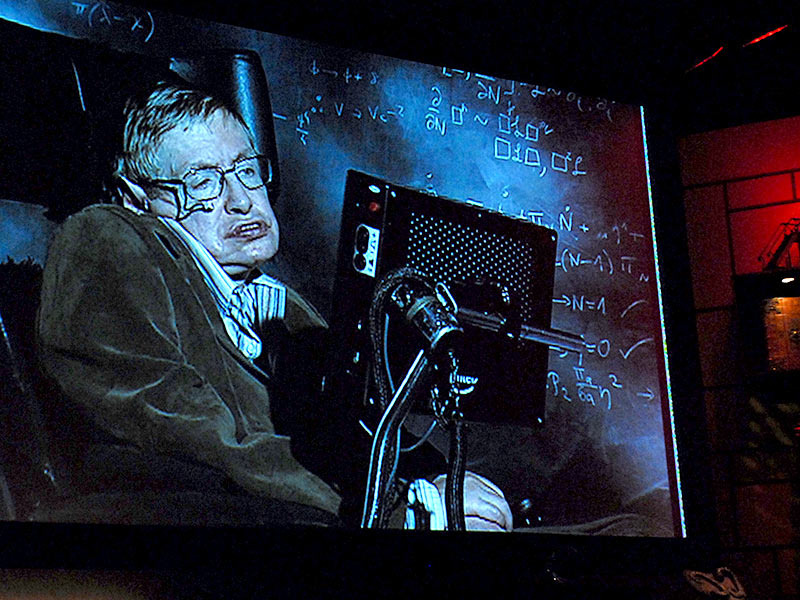
Explore contentIn keeping with the theme of TED2008, professor Stephen Hawking asks some Big Questions about our universe -- How did the universe begin? How did life begin? Are we alone? -- and discusses how we might go about answering them.
Explore contentAstronomy extends beyond visible light, using radio, infrared, ultraviolet, X-ray and gamma-ray observations to reveal the otherwise invisible Universe. Credit: ESA/Hubble (M. Kornmesser & L. L. Christensen)
Explore contentThis episode explains the scientific advantages of placing telescopes above Earth's atmosphere and surveys the achievements of space observatories. Credit: ESA/Hubble (M. Kornmesser & L. L. Christensen)
Explore contentThe final Eyes on the Skies chapter looks ahead to future ground-based telescopes and space observatories designed to explore new cosmic frontiers. Credit: ESA/Hubble (M. Kornmesser & L. L. Christensen)
Explore contentA deep Hubble image of the unusual spiral galaxy NGC 4921 reveals fine structure and a rich background of distant galaxies. Credit: ESA/Hubble (M. Kornmesser & L. L. Christensen)
Explore contentHubble's observations of planets, moons and small bodies show how the telescope has expanded knowledge of the Solar System. Credit: ESA/Hubble (M. Kornmesser, Colleen Sharkey & Lars Lindberg Christensen)
Explore content